Why Photoelectric Smoke Alarms Are Preferred in British Columbia
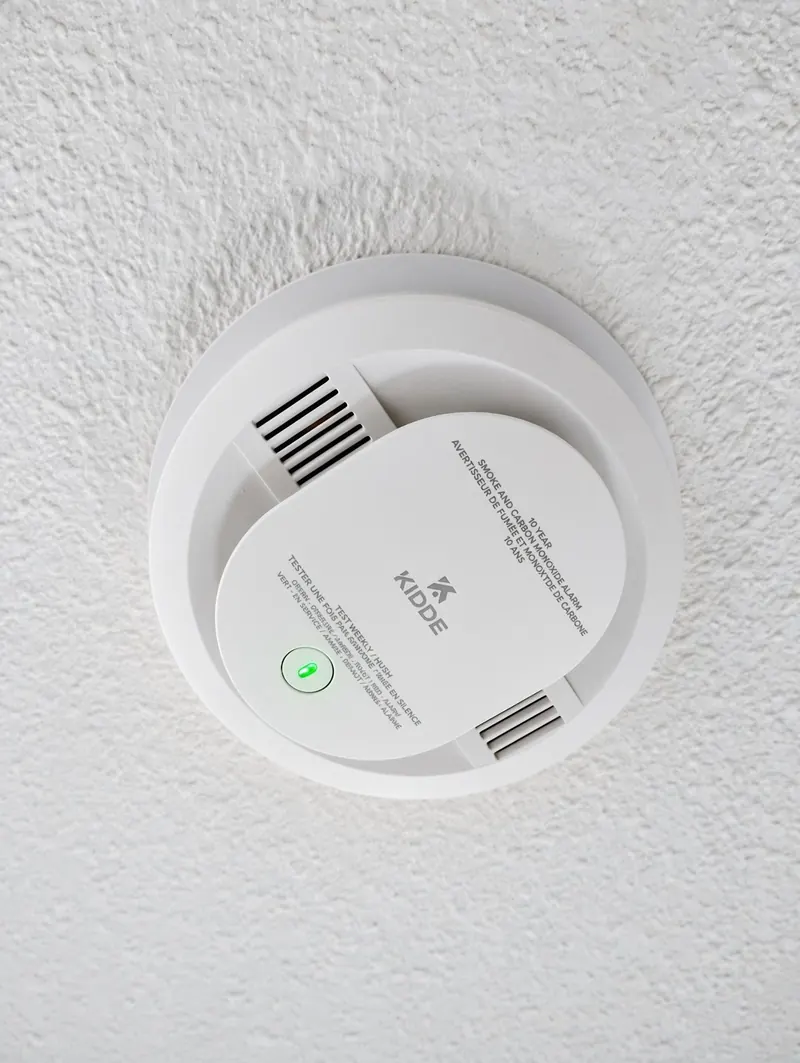
If you live in Vancouver, Burnaby, Richmond, Surrey, Coquitlam, Maple Ridge, or anywhere else in the Lower Mainland, the type of smoke alarm in your home matters more than most people think.
Photoelectric alarms are now the preferred choice for new work, suite upgrades, and replacements. They're better at catching the smouldering fires that start in furniture and bedding, they're less likely to scream every time someone showers, and in several official BC scenarios they're required.
The Smoke Alarm Doctor installs 10-year lithium photoelectric smoke and smoke/CO combo alarms from Kidde and BRK / First Alert for homeowners, strata, and short-term rental hosts across the Lower Mainland. This guide explains the rules, the official sources, and what to do if your home still has older BRK or ionization units.
Photoelectric vs Ionization — In Plain Language
There are two common sensing methods in household smoke alarms.
Photoelectric uses a beam of light inside a chamber. When visible smoke particles scatter that light, the alarm sounds. These units are generally better at detecting slow, smoky, smouldering fires.
Ionization uses a small electrical current in the chamber. Tiny particles from fast, flaming fires interrupt that current. These units are generally more sensitive to cooking steam, shower steam, dust, and humidity.
Maple Ridge's own public smoke-alarm handout explains both technologies and notes that photoelectric alarms are considered less prone to nuisance alarms, while ionization units are more sensitive to humidity, dust, and vapours. That's why so many Lower Mainland bathrooms, kitchens, and hallways next to showers keep setting off older ionization alarms in the middle of the night.
What BC Code Actually Says
It's important to be precise. The British Columbia Building Code does not ban ionization alarms in every existing single-family home. What it does do is require photoelectric alarms in specific, very common situations — especially houses with secondary suites.
Secondary Suites and Interconnected Photoelectric Alarms
BC Building Code Article 9.10.19.5 says that in a house with a secondary suite (including common spaces):
- If the fire separations have a fire-resistance rating of not less than 15 minutes, all smoke alarms shall be of photoelectric type and interconnected so that any one alarm sounds all alarms in the house.
- If the separations are not less than 30 minutes, an additional photoelectric smoke alarm must be installed in each dwelling unit and common space and interconnected between units.
Official municipal guides quote this language directly. The City of Nanaimo's Suite / Main Dwelling Alarms Installation Guide reprints BC Building Code 9.10.19.5 and states that all smoke alarms shall be of photoelectric type when using the 15-minute separation option. That same photoelectric-and-interconnect rule shows up in Building Officials' Association of BC interpretations and other municipal secondary-suite guides.
If you have a legal or proposed suite in Vancouver, Burnaby, New Westminster, Coquitlam, or Maple Ridge, inspectors commonly look for photoelectric units and matching detection types. Mixing ionization and photoelectric in the same interconnected system is a frequent fail.
Existing Homes Still Need Working, Listed Alarms
The BC Fire Code requires smoke alarms in every dwelling unit and in sleeping rooms that are not part of a dwelling unit. Installation must follow CAN/ULC-S553, Standard for Installation of Smoke Alarms. Battery-operated units are permitted only in limited existing-building situations.
The City of Vancouver requires smoke alarms in every dwelling unit, new or old, and tells residents to choose alarms approved by Underwriters Laboratories of Canada and to follow manufacturer placement rules. Vancouver also recommends replacing smoke alarms every 10 years.
Official sources you can confirm this against:
- City of Vancouver — Smoke Alarms
- BC Office of the Fire Commissioner — Smoke Alarm Upgrades
- Nanaimo Suite Alarm Installation Guide (quotes BC Building Code 9.10.19.5)
- Maple Ridge — Smoke Alarms
- CAN/ULC-S553 — Installation of Smoke Alarms (Standards Council of Canada)
Keep Alarms Away From Steam and Cooking
False alarms don't just annoy people. They cause homeowners to disable units — and a silenced alarm can't wake anyone. BC Building Code Article 9.10.19.3 requires smoke alarms to be installed in conformance with CAN/ULC-S553 and on or near the ceiling. Manufacturer instructions and installation practice then keep units out of steam and cooking vapour.
| Location | Keep the alarm away from |
|---|---|
| Bathroom / shower | At least 1 metre (about 3 feet) from the bathroom door opening whenever possible. Steam from a hot shower is a leading cause of nuisance alarms. |
| Kitchen / range | Generally at least 3 metres (about 10 feet) from a fixed cooking appliance. Don't install in the bathroom or directly outside a steamy ensuite. |
| HVAC / fans | Away from supply and return air vents and ceiling-fan blades so airflow doesn't dilute smoke or blow steam into the chamber. |
| Dead-air corners | Not tight into the wall-ceiling corner pocket. Mount on the ceiling or high on the wall per the manufacturer. |
Municipal building-department guidance based on ULC installation practice tells installers not to locate smoke alarms within about 1 m of a bathroom doorway header and not less than about 3 m from a fixed cooking appliance. Photoelectric units still shouldn't sit in the steam path — they're simply less twitchy than ionization units when humidity and vapour drift down a hallway.
Use the Same Detection Method Throughout the Home
This is one of the most important points for Lower Mainland homeowners and strata. When alarms are interconnected — which BC requires inside a dwelling unit whenever more than one smoke alarm is required — they should use the same sensing technology.
- Code and inspection. Suite work that uses the 15-minute fire-separation path requires all smoke alarms to be photoelectric.
- Nuisance behaviour. An ionization unit in a hallway outside a bathroom can trip the entire interconnected system.
- Replacement matching. If one expired ionization head is swapped for a photoelectric head on an old BRK/First Alert interconnect string, compatibility and performance can become inconsistent.
- Clear documentation. Strata managers, insurance files, and future buyers want a simple story: every unit is the same brand, 10-year, photoelectric where required, interconnected, and installed to ULC-S553.
If any alarm in the home is due for replacement, the smart move is to convert the whole group to photoelectric rather than mixing technologies.
Why Older BRK / First Alert Units Are Usually Ionization
Many older hardwired alarms in Lower Mainland homes are BRK or First Alert models, such as the 9120BA and 9120LBLA. The manufacturer's own Canadian product pages describe these as ionization smoke alarms. The 9120BA uses a dual ionization sensing chamber and is described as generally more effective at detecting small particles from flaming fires. The 9120LBLA is listed as a hardwired ionization smoke alarm with 10-year battery backup.
Those units were legal when they were installed. They're not the best choice for a bathroom hallway in a Vancouver condo, a Maple Ridge townhouse ensuite, or a Burnaby house with a suite.
When a BRK or First Alert ionization alarm reaches its 10-year replacement date, is chirping, or is part of a suite upgrade, our recommendation is a 10-year lithium photoelectric smoke alarm or smoke/CO combo — Kidde, or BRK / First Alert if you prefer to stay with the brand.
If you would rather stay with BRK / First Alert, we also stock their current 10-year hardwired photoelectric models — the SM6W10A smoke alarm and the SC6W10A smoke/CO combo, both 120V with a sealed 10-year lithium battery backup. Because they are photoelectric, they are a good fit for hallways near bathrooms and kitchens, and for suite upgrades on the photoelectric path. Richard will tell you on site which option suits your home.
Look on the back or side of the alarm for:
- The word ionization or the letter I
- "Contains radioactive material"
- A manufacture date older than 10 years
Look for photoelectric or the letter P on the replacement.
Ready to switch to photoelectric?
Richard will identify every ionization unit in your home, replace it with a Kidde 10-year lithium photoelectric alarm, and test everything before he leaves. Same or next-day service available across the Lower Mainland.
Book a visit — $99.99 flat rateWhat The Smoke Alarm Doctor Installs
We specialize in residential smoke and carbon monoxide alarms only. We don't service commercial fire-alarm panels, speakers, strobes, or pull stations.
On a typical Lower Mainland job we:
- Inspect every existing alarm and note the sensing type, age, and power source
- Replace expired or ionization units — Kidde or BRK / First Alert 10-year photoelectric, matched to your home
- Install alarms you have already bought, if they are new, in-date and CSA/ULC-listed
- Hardwire and interconnect where the home already has a hardwired system
- Keep units on or near the ceiling and out of steam and cooking paths
- Test every alarm before we leave
- Dispose of the old units
| Service | Price |
|---|---|
| Service visit | $99.99 |
| Kidde photoelectric smoke alarm, installed | $69.99 (plus service fee) |
| Kidde sealed-battery photoelectric smoke/CO combo alarm, installed | $89.99 (plus service fee) |
| Kidde hardwired photoelectric smoke/CO combo alarm, installed | $109.99 (plus service fee) |
| BRK / First Alert hardwired photoelectric smoke alarm (SM6W10A), installed | $64.99 (plus service fee) |
| BRK / First Alert hardwired photoelectric smoke/CO combo (SC6W10A), installed | $94.99 (plus service fee) |
| Customer-supplied alarms, installed | First 2 included in service fee; $29.99 each after |
| Battery replacement on an existing unit | $4.99 per alarm |
| 5 lb fire extinguisher | $99.99 |
Taxes extra. High-volume / strata pricing available.
Serving Maple Ridge, Pitt Meadows, Coquitlam, Port Coquitlam, Burnaby, New Westminster, Vancouver, Richmond, Surrey, Langley, and the rest of the Lower Mainland.
Quick Checklist for Homeowners and Strata
- Check the manufacture date. Replace anything 10 years or older.
- Identify ionization vs photoelectric on the label.
- If you have a suite, or you're doing suite work, plan on photoelectric throughout.
- Don't mount alarms in bathrooms or tight against a steamy ensuite door.
- Keep the same sensing type on every interconnected alarm.
- Test monthly. Vacuum gently twice a year.
- Book a professional inspection if several units are expired, mixed, or constantly chirping.
Frequently Asked Questions
Are ionization smoke alarms banned in BC?
How do I tell if my smoke alarm is photoelectric or ionization?
Can I mix ionization and photoelectric alarms on the same interconnected system?
How much does it cost to upgrade to photoelectric alarms in the Lower Mainland?
Why does my smoke alarm keep going off when I shower or cook?
Richard — Founder & Head Technician, The Smoke Alarm Doctor
Fire alarm technician with 15+ years in the trade, veteran, and father serving Greater Vancouver since 2020. Every job is done personally — no subcontractors. 100+ five-star Google reviews.
Related Articles
We install and replace smoke and CO alarms across the Lower Mainland, including Vancouver, Burnaby, Richmond, Surrey, Coquitlam, New Westminster, North Vancouver, Maple Ridge, Langley. See current prices.